

The Shortfin Squid
Posted 09/14/26
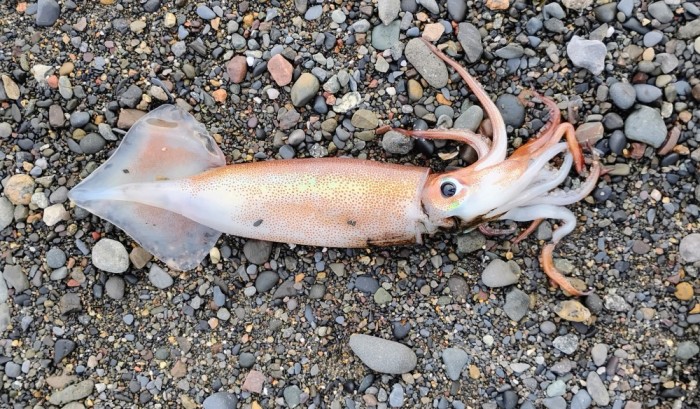
There were many squids found washed up on the Lubec Narrows breakwater by the Campobello bridge recently. An “ask around”* revealed that this has been the largest influx of this species in our coastal waters since 1970. Their natural migration cycle brings them into the northern bays and harbors regularly, but this has been an exceptionally busy year, the influx of squid extending from Cape Cod, MA to as far north as Halifax Harbor in Nova Scotia. They are predominately a mid-Atlantic species found off the coasts of Rhode Island to New Jersey.
There have also been reports of dramatic beach strandings in Cape Cod of these little cephalopods. Not much is known about the population numbers and breeding habits of the shortfinned squid but restrictions do exist on the commercial fisheries based on catch numbers (somewhere around seven million pounds/yr) Many saltwater anglers are catching their first shortfinned squids this year as they fish for mackerel off the local pier or in small boats. There are no specific limits regarding size or limiting the numbers of your catch but to do so legally, you must either be registered with the Maine Saltwater Recreational Fishing Registry or hold a valid ME freshwater fishing license. And the squid cannot be sold when caught on a recreational license.
The young ones eat krill and zooplankton (of course, first they must survive being zooplankton themselves, a favorite food for so many marine filter feeders like baleen whales and the twenty-five foot basking sharks which thrive just off the island of Grand Manan) but as they grow to adult size, maybe ten inches or a foot long, they move on to larger prey, mackerel, juvenile herring, crabs, and the like. They in turn are a large part of the diet of pilot whales, and larger fish, tuna and cod, for instance. Due to warming ocean waters, there has been a great number of striped bass moving into the Gulf of Maine and up into the Canadian Maritimes. The bass and bluefish can very well be at the root of this extended inbound migration of shortfin squid so, as water temps increase, we might continue to see a larger than usual coastal influx of these sea creatures over time.
The last time I saw someone catch a squid off the Eastport dock, it was a great anomaly, and few people knew what to do with it. I can only assume they have never been to my favorite Greek restaurant in Groton, Ct. (a secret, unnamed spot where the calamari dish is not on the menu but, if you ask with sufficient respect for this delicious meal, you might just get lucky) Calamari!
Shortfinned squid (and all of their cousins) are very intelligent. Like the other cephalopods renowned for their awe-inspiring behaviors and abilities, squid are one the most intelligent cephalopods on the planet. We often attribute our intelligence to the existence of hands, which inspire much activity and complex motor actions thereby expanding the scope of our knowledge. Imagine, if we, like the cephalopods, had eight arms attached directly to our heads, each arm lined with hundreds of so-called “suckers,” each pad a highly sophisticated sensory organ vastly superior to our fingertips and each appendage having a brain of its own to sort through the data received from these miracles of marine life. That’s a whole other line of speculation which you folks can take up on your own time.
The squid are beautiful, smart, delicious, and worthy of our great respect. Live long, my wild little marine friends, and prosper as the Vulcan would say.
* thanks to Dr. Moira Brown, Marine scientist at the Canadian Whale Institute and great defender of the highly endangered North Atlantic right whales for the factual stuff. The wandering and any errors are all mine.
By: CA Kniffen